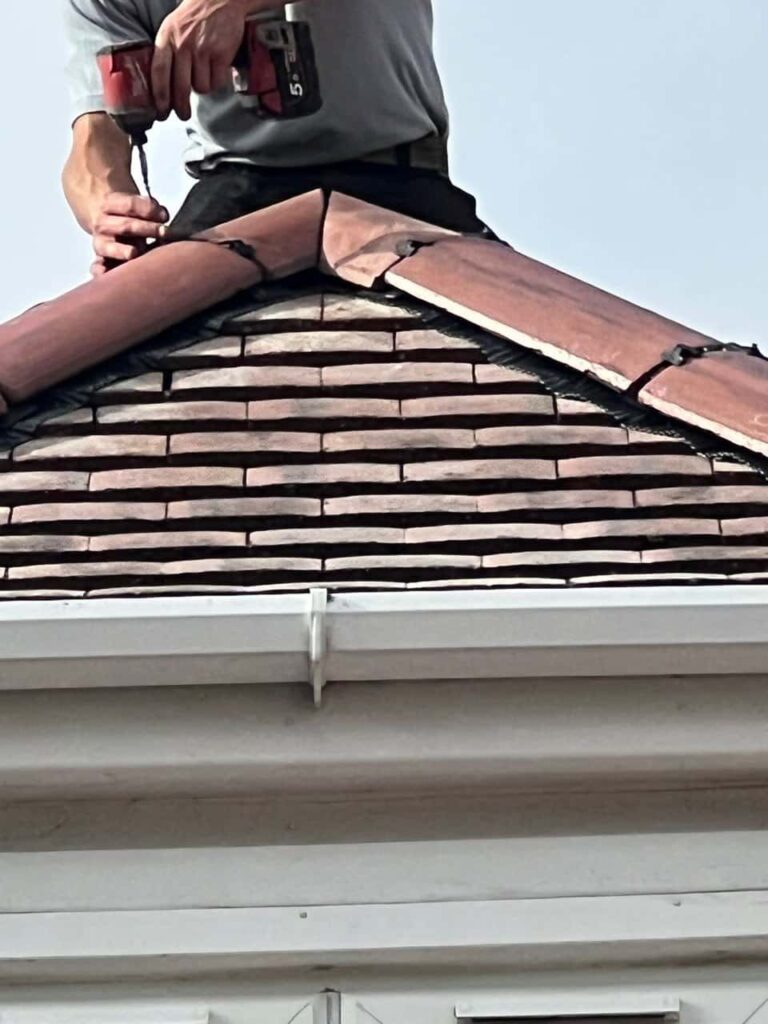
Discovering damaged slates does not automatically mean that an entire roof needs replacing. Slate roofs are made up of individual units, which means localised defects can often be repaired while sound surrounding areas remain undisturbed. The important question is not simply whether damage exists, but how extensive it is and what has caused it.
A small number of cracked, slipped or missing slates may point towards a straightforward local repair. However, repeated slate movement, widespread deterioration or problems with the supporting components beneath the covering can indicate that the issue extends further than the visible damage.
For property owners in Blandford Forum, Dorset, a professional roof assessment can establish whether targeted slate repairs are appropriate or whether deterioration has become sufficiently widespread to justify considering more extensive work. A proportionate approach starts with understanding the condition of the complete roof rather than assuming replacement is necessary because several slates have failed.
When Can a Slate Roof Be Repaired Rather Than Completely Replaced?
Local slate roof repairs can often be appropriate when the damage is limited and the wider roof remains in serviceable condition.
Factors that can influence the decision include:
- The number of damaged or missing slates
- Whether damage is concentrated in one area
- The condition of surrounding slates
- Whether individual slates are cracked or slipping
- The condition of slate fixings
- The condition of the supporting battens
- Whether water has affected underlying components
- The condition of ridges, valleys and flashing
- The extent of previous roof repairs
- Whether defects keep returning
- The overall condition of the roof covering
No single factor determines the answer. The complete pattern of deterioration needs to be considered.
A Few Damaged Slates Can Often Be Addressed Locally
Individual slates can become cracked or damaged while the majority of the roof remains perfectly serviceable.
In these circumstances, replacing the complete roof would not necessarily be proportionate.
The affected slates can potentially be removed and suitable replacements installed while retaining sound surrounding materials.
Before doing so, however, it is useful to determine why those particular slates failed. If the cause involves deteriorated fixings or supporting materials, simply replacing the visible slate may not provide a lasting repair.
Missing Slates Do Not Automatically Mean Widespread Failure
A missing slate creates an obvious gap in the roof covering, which can make the problem appear more extensive than it actually is.
Where one or two slates have become displaced but the surrounding roof remains stable, targeted repair may be sufficient.
The affected area should still be examined carefully.
The objective is to determine whether the slate became detached because of an isolated problem or whether its movement is part of deterioration affecting a larger section of the roof.
Cracked Slates Can Usually Be Considered Individually
A crack can affect the ability of a slate to perform effectively as part of the overlapping roof covering.
Where the damage is confined to individual slates, those units may be replaced without disturbing large areas of sound roofing.
Several cracked slates appearing within the same section can require more investigation.
Rather than assuming that each crack is unrelated, the surrounding roof should be assessed for a common cause or broader pattern of deterioration.
Slipped Slates Can Point to Fixing Problems
A slate that has moved down the roof slope may still appear physically intact.
In this situation, the problem can relate to how the slate was secured rather than the slate material itself.
Slate fixings can deteriorate over time. When they no longer provide effective restraint, individual slates can begin slipping from their intended position.
A suitable repair therefore needs to consider the fixing arrangement rather than simply pushing the slate back into place.
Repositioning a Slate Is Not Necessarily a Complete Repair
Returning a displaced slate to its original position can restore the appearance of the roof temporarily.
However, if the fixing that previously held it has failed, the reason for the movement remains.
The slate may subsequently slip again.
A professional repair aims to restore the slate as a functioning part of the roof covering, addressing the relevant fixing or support rather than concentrating solely on its visible position.
Supporting Battens Need to Be Considered
The slates are only the visible part of a roof.
Supporting components beneath them also contribute to the performance of the covering.
If battens within a particular area have deteriorated, several neighbouring slates can potentially become unstable.
In this situation, replacing individual slates without addressing their support may result in recurring problems.
Localised batten deterioration may still be repairable without replacing the complete roof, depending on its extent and the condition of surrounding materials.
Hidden Problems Can Be More Important Than Visible Damage
A roof can display only a small amount of visible slate damage while deterioration exists beneath the surface.
Conversely, several visibly damaged slates can sometimes be replaced while the underlying construction remains sound.
This is why the number of broken slates alone cannot determine whether repair or replacement is appropriate.
Inspection of the affected area helps establish whether the problem is genuinely confined to the outer covering.
Water Ingress Does Not Automatically Require a New Roof
Finding evidence of a roof leak can understandably raise concerns about the condition of the complete roof.
However, water ingress can originate from a relatively localised defect.
A displaced slate, damaged flashing or problem around a particular roof detail can sometimes provide a route for rainfall even though the wider covering remains serviceable.
The important task is locating the actual point of entry and understanding why it developed.
A targeted repair may be suitable where the cause can be clearly identified and the surrounding roof remains sound.
The Location of the Leak Can Be Misleading
Water does not necessarily become visible inside a property directly beneath the external defect.
Once moisture enters the roof construction, it can travel along materials before appearing internally.
This means repairing the roof based solely on the position of a ceiling mark can overlook the true source.
A systematic inspection of the external covering and relevant roof details provides a more dependable basis for deciding what needs attention.
Valleys Need Careful Assessment
Roof valleys deal with concentrated flows of rainwater where roof slopes meet.
Because of their function, defects in these areas can sometimes produce significant symptoms even when the wider slate covering remains in reasonable condition.
Slates adjacent to a valley need to integrate correctly with the valley construction.
If damage is concentrated around this area, the valley and surrounding slates should be considered together rather than replacing individual units without examining the complete detail.
Flashing Can Be Responsible for Problems That Appear to Involve Slates
Not every leak on a slate roof originates from the slates themselves.
Flashing is used around various roof junctions and features to maintain weather resistance.
Where flashing deteriorates or becomes defective, water can enter even when nearby slates remain largely serviceable.
Correct diagnosis is therefore essential.
Replacing sound slates would provide little benefit if the actual weakness lies within an adjoining roof detail.
Ridge Areas Can Develop Localised Defects
The upper areas of a roof contain details that perform differently from the main slate covering.
Deterioration around ridge sections can create problems that need specific attention.
If the main roof slopes remain in good condition, localised work around these details may be more appropriate than replacing otherwise serviceable slate.
Assessment should distinguish between deterioration of a particular roof feature and failure of the complete covering.
Previous Repairs Can Influence the Decision
Older slate roofs may contain evidence of repairs carried out at different times.
The presence of previous work is not automatically a concern. A well-executed local repair can continue performing effectively.
The pattern becomes more important when numerous areas have been repeatedly repaired or the same defects continue returning.
At that point, it is worth considering whether individual repairs are still addressing isolated issues or whether they reflect more general deterioration across the roof.
One Previous Repair Does Not Mean Replacement Is Needed
A roof should not be judged simply because it has been repaired before.
External roofing materials naturally require attention when individual defects develop.
If a previous repair remains stable and a new problem occurs elsewhere as an isolated issue, another targeted repair may still be appropriate.
The overall condition of the roof is more informative than the simple number of occasions on which somebody has worked on it.
Repeated Repairs in the Same Area Need Investigation
When the same section repeatedly causes problems, continually replacing individual slates may not address the original weakness.
The supporting battens, fixings, adjacent details or underlying construction may require attention.
Investigating recurring defects can help identify whether a more comprehensive local repair is needed.
This is still different from assuming that the entire roof requires replacement.
Widespread Slate Deterioration Changes the Situation
Local repair works best when the surrounding roof provides a dependable surface into which the repair can be integrated.
If large numbers of slates are deteriorating across several sections, the situation becomes different.
Continually replacing individual units may become less effective when neighbouring materials are also approaching the point where defects are increasingly likely.
A broader assessment can establish whether repairs remain proportionate or whether the overall covering should be considered.
The Condition of Surrounding Slates Matters
A damaged slate should never be considered entirely in isolation.
The slates around it help provide context for the repair.
If surrounding units remain secure and in reasonable condition, a local replacement can integrate into a sound area.
If neighbouring slates are cracked, loose or repeatedly slipping, replacing only the most obvious damaged unit may leave other weaknesses unresolved.
The condition of the surrounding covering is therefore an important part of deciding how extensive the work needs to be.
Age Alone Does Not Decide Whether a Slate Roof Needs Replacing
An older roof is not automatically a failed roof.
Condition is more useful than age when deciding between repair and replacement.
A mature slate roof may still contain extensive areas that remain serviceable, making carefully targeted repairs worthwhile.
Equally, a roof with widespread deterioration should not continue receiving isolated repairs simply because some individual slates still appear sound.
The decision should reflect what the inspection reveals about the complete roofing system.
A Roof Can Have Several Different Defects at Once
Roof deterioration does not always occur as one single problem.
A property may have several damaged slates alongside a local flashing defect or deterioration around another roof detail.
These problems should be considered individually and collectively.
Several defects do not automatically mean that replacement is required, particularly if each remains clearly localised.
However, numerous issues distributed throughout the roof can indicate that a wider approach deserves consideration.
Local Repairs Can Preserve Sound Existing Slate
One of the main benefits of targeted slate roof repair is the ability to retain materials that remain in serviceable condition.
Where only a defined section is defective, there is little value in unnecessarily disturbing sound areas.
Careful local repair focuses work where it is needed.
This proportionate approach depends on accurately identifying the extent of the problem before deciding how much of the roof should be disturbed.
Matching Replacement Slates Requires Care
When individual slates need replacing, the new units must function properly within the existing covering.
Dimensions, thickness and the way the replacement sits with neighbouring slates can all influence the finished repair.
The aim is not merely to cover the visible opening.
The replacement should integrate appropriately with the existing arrangement so that the roof continues to perform as a coherent overlapping system.
The Overlap Between Slates Is Fundamental
Slate roofs rely on carefully arranged overlapping courses to manage rainfall.
When slates move or become damaged, that arrangement can be disrupted.
A repair therefore needs to restore more than the appearance of the roof.
The correct positioning and relationship between replacement and surrounding slates is important for maintaining the intended covering.
This is another reason professional slate repairs require more consideration than simply inserting a piece of material into a visible gap.
Small Defects Should Not Be Ignored
A single damaged slate may remain a relatively contained issue, but leaving an opening within the covering can expose underlying areas to greater weathering.
Early attention allows the affected section to be assessed while the problem may still be localised.
This does not mean every minor visual imperfection requires major work.
It means genuine defects should be investigated so that an appropriate repair can be made before additional deterioration has an opportunity to develop.
Localised Damage and Widespread Deterioration Require Different Solutions
The distinction between these two conditions is central to deciding whether a slate roof can be repaired.
Localised damage may involve:
- A few cracked slates
- One or more slipped units
- An isolated fixing problem
- A limited area of batten deterioration
- A specific flashing or valley defect
Widespread deterioration may involve recurring problems across multiple roof areas, substantial numbers of unstable slates or supporting components that are no longer providing consistent performance.
The appropriate solution should match whichever condition is actually present.
When Is Targeted Slate Repair Most Appropriate?
A local repair is most likely to be suitable when the defect can be clearly identified and the surrounding roof remains dependable.
The affected slates and any relevant supporting components can then be addressed without unnecessary work elsewhere.
Professional assessment helps define the boundaries of the repair.
This is particularly important where the visible damage is small but there is uncertainty about the condition underneath.
When Should More Extensive Roofing Work Be Considered?
More extensive work becomes relevant when deterioration is no longer confined to isolated areas.
Repeated slate movement, numerous failing sections, widespread problems with supporting materials or a history of recurring defects can indicate that continued individual repairs may not provide the most appropriate long-term approach.
This still requires assessment rather than assumption.
The purpose is to determine whether the roof continues to offer enough sound material for targeted repair to remain practical.
A Full Roof Replacement Should Be Based on Overall Condition
The presence of several damaged slates alone is not sufficient reason to conclude that an entire roof must be replaced.
A replacement becomes more relevant when the condition of the complete roofing system makes continued localised repairs increasingly unsuitable.
This distinction protects serviceable roofing from unnecessary disturbance while also recognising when deterioration has become too extensive for isolated work to address effectively.
A professional assessment provides the information needed to make that distinction.
Why Professional Slate Roof Assessment Matters
From ground level, it can be difficult to determine whether a slate roof has one straightforward defect or several connected problems.
At MCM Roofing Repairs Blandford Forum, we assess the visible damage together with surrounding slates, relevant fixings and supporting roof components before determining the appropriate scope of repair.
For property owners in Blandford Forum, Dorset, this means the recommended work can reflect the actual condition of the roof rather than assuming that either a minor repair or complete replacement is always the answer.
The objective is to retain sound roofing where practical while ensuring that the underlying cause of damaged, slipped or missing slates receives appropriate attention.
Conclusion
Yes, a damaged slate roof can often be repaired without replacing the entire roof. Where deterioration is limited to individual cracked, slipped or missing slates, failed fixings or another clearly defined section, targeted repair may allow the remainder of a serviceable roof to stay in place.
The decision changes when problems become widespread or repeatedly return across several areas. In those circumstances, the condition of the slates, fixings, battens and other roof details needs to be considered together to determine whether continued local repairs remain appropriate.
If you have noticed damaged, slipped or missing slates at your property in Blandford Forum, Dorset, contact MCM Roofing Repairs Blandford Forum. We can assess the affected roof area, identify the likely cause and recommend a proportionate repair approach based on its condition.
Call us on: 01258 442 298
Click here to find out more about MCM Roofing Repairs Blandford Forum
Click here to complete our contact form and see how we can help with your roofing needs.